Tuesday, October 30, 2007

Project Management Tools

Most software projects nowadays get implemented by multiple people/teams working in multiple geo-locations and time zones. How does one collaborate, plan and track the project in terms of modules, peoples and milestones?

Since I've had a few queries on this subject, I thought I'd publish this list here. I have personally used ZoHo (recent), AceProject and Quickbase. Some are free, some paid, some hosted and some open-source. So just make your pick Wink

1. ZoHo
http://projects.zoho.com/jsp/home.jsp
- Lots of Ajax.
- Time track, gantt charts etc... feature rich.
- Free signup.
- Subscription plans starting from $0 to $80 per month.

2. AceProject
http://www.aceproject.com/
- Used by many firms.
- Solid and simple time tested framework and interface.
- Available as hosted solution or in source code!
- An exhaustive list of features.
- Upgradeable free starter subscription.
- Subscription from $0 to $99 per month.


3. Projectory
http://projectory.sourceforge.net/features/
- Free! (Do make a donation)
- OS Agnostic
- Un-complex

4. SourceForge Enterprise
http://sourceforge.net/powerbar/sfee/
- Integration with svn (subversion) is a great feature.
- Free download for upto 16 users.
- Very powerful

5. QuickBase
http://www.quickbase.com/p/applications/forIT.asp
- Used much by Fortune 100 companies (so says its site)
- IT projects management is just a part of its wider array of offerings
- I guess its the costliest of the lot (need to confirm though)

Thursday, October 18, 2007

Entrepreneurship and me

My tryst with entrepreneurship started on a rather weird note. Back when I was in school, it was an incredibly twisted word with an equally twisted pronunciation. From the time that I can remember, I've been a creative person. So as kid, cardboard boxes lying around would get wheels added and get turned into toy buses; There'd be NO electronic or electric or mechanic device in my house that I'd NOT opened and put back together (mostly in one piece) ever after I'd found how to use screw-drivers. By the time I was in high school, I was playing with diodes, LEDs, capacitors and soldering irons. But there was one tool that I'd admit had provided a really wide canvas - the humble PC. I would've been eleven when I wrote my first program in BASIC - all I can remember are the green pixelated dots that formed the characters on the 'screen' of its monochrome display (I'd reckon, most mobile phones today have screens and processors that are an order of magnitude better than those). Anyways, by the time I graduated as an electronics and communications engineer, I'd made my mark as a hobby programmer (thanks to a few of my seniors who'd introduced me to C++ and VB), I even got offers from a few schools near our college to develop custom software for them (While I did a few demos, none of the 'deals' materialized) and it felt good! I had a dream of being able to do this as my vocation - but then it had to remain a dream. Personally, it was an intention to completely express a God given talent - creativity. I consider myself compulsively creative - almost a software artist and so when I got a chance, I thought that the best way to express it would be in the freedom offered by an entrepreunial context. Creating, understanding and solving give me an 'adrenaline rush' - my highs. My choice of not joining a regular IT company (I was even placed into one through campus recruitment) was more providence than a real 'choice' because at that time I really did not have anything else to chose from. My association with Tandem Infotech (a 30-40 member strong IT company which was a part of my friend Jayadev's Tandem Group) was supposed to be a stop-gap arrangement till I'd found something else (I'd even written the GRE). My initial role there, as a consultant, was to come up with an anti-piracy solution for their cafe management software. Along the way, I got to work on a few mobile games as a part of an international project and then in late 2002/3 (after a brief crisis), it was decided to spin off the then nascent mobile arm into an independent division and eventually into a separate entity in which I'd also be a significant stake holder (if not, I'd probably have looked elsewhere for a living). And thus started my real rendezvous with entrepreneurship (though the new company Tinfo Mobile actually got registered only in 2005). Its been a wonderful journey. I have learned a lot though I'd admit I haven't earned as much ;-). Here's a gist of my most important takeaways: 1. Be optimistic, but expect failures - they are bound to come - in droves. 2. There will be the occasional good times - most projects do go right, media spotlight etc... 3. Not every entrepreneur ends up with a money-spinning juggernaut of an enterprise. 4. The entrepreneur's role gives one a chance to work against all conventions and established norms. 5. Money does not grow on trees. Ideas alone cannot seed money trees. Ideas can grow into revenues, if combined with - people who can implement it - people who can sell it - money to fund the above two - money to market it - lady luck / divine providence. 6. Abraham Maslow was right. 7. Work towards customer delight and at the same time NEVER promise what you're not confident of delivering. 8. A satisfied customer is your best asset and an unsatisfied one could prove to be your undoing. 9. Let go when you must! Nothing lasts for ever and there are no guarantees. 10. Avoid getting emotions involved in taking pure business decisions. 11. The core team must be dedicated to a plan and a goal. People with other commitments and other goals will inevitably stall progress. 12. While one needs to multi-task, there would be one thing that one is really good at. Just creating an environment where people are free to do what they are best at is a good strategy. 13. Factors like aesthetics, design, location and packaging do matter. 14. Never stop learning. And finally, as I'd mentioned in an article earlier: An added advantage of being an entrepreneur; borrowing Edison's words after thousands of failed attempts at his inventions - "At least I know 10,000 ways this will not work!" :-) (In my next article, I plan to review another article written on why certain people might be more successful entrepreneurs than others.)

Sunday, September 23, 2007

A few scanned pics from the REC days

(File under non-tech)
I had a few scanned pictures from my REC days, mostly ECE 97 guys, on my hard-drive. Thought there might be people who'd like to see 'em, so here goes:


PS: You are invited to identify yourselves in comments to the pics :)

Saturday, September 22, 2007

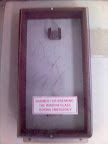
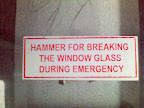
Jan Shatabdi Trivandrum Ernakulam - the invisible emergency hammer.


Train journeys are seldom uneventful. Yesterday, Jayadev and I went on a one-day business trip to Ernakulam (Kochi) and back to Trivandrum (Thiruvananthapuram). This was my first trip on the Jan Shatabdi Express (the link says how these trains came about). Though conceived as a 'cleaner', faster and slightly costlier service, it is does not even come close to what would internationally be considered fast and clean. A google search also drew out this undated document lamenting its low occupancy rate (? - our train was pretty full; the doc seems to have been written in 2003)


Anyways, this train is better than the average Indian 'train' on all counts (more on that later). Though low cost carriers like Air Deccan may soon threaten its existence - there are quite a few who'd prefer to travel well grounded :) So the good things first:

1. Pretty fast with just a few stops and pretty comfy luxury bus kinda push back seats.

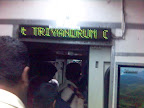
2. GPS / GSM (?) based station display which shows ETA at the next stop, the time we passed last waypoint etc.

And now the bad things:

1. Whoever designed the air-conditioning system, gave no thought to the noise it made! It made a constant shrill high pitched tone almost throughout the journey! Unfortunately, no one else seemed to share my sensitivity towards this sound - they seemed happily unaware of the sound that was driving me crazy.

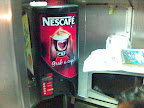
2. Tea / coffee / snacks. Although the entire journey hardly last a quarter of a day - it does make one hungry. I was pleasantly surprised to find Nescafe coffee vending machines and microwave ovens inside the compartments (Now that sounds like a first inside indian railways). However, I was told that these had just been there for a few weeks and might take months to get functional. I sure hope railways can make it operational asap.


3. Now for the (dangerously bad) icing on the spoilt cake ;) This is something that we Indians are pretty good at - being terribly unprepared for emergencies. The pictures are self explanatory. However, for those who cannot see the writing on the image clearly, here's the text - "HAMMER FOR BREAKING THE WINDOW GLASS DURING EMERGENCY". The only problem is - there is no hammer inside the beautifully sealed enclosure (or it is of the invisible kind). A quick glance revealed that even the next compartment had a non-existent emergency hammer.


Now, I do not know for sure how much difference that hammer might make in an emergency, but I sure do hope and pray that no-one gets into such a situation!

Friday, September 14, 2007

Mobile handsets as gaming devices. Part III

(...Continued from Part II)

The following graphic depicts a rough time-line. Most of the handsets like the Motorola T720 and the Nokia 7650 are now extinct.


A notable and notorious handset as far as mobile gaming is concerned was the N-Gage and the N-Gage QD from the Nokia stable. Though visionary in its purpose, it failed in its execution at being a mass market gaming device which could also make phone calls. The take-away from its life was the fact that until the technology so matures, mobile phones are not a hard-core gamer's first port of call. They will always have their PS3s for that.

However, what is notable is the progress made in handset technology over these few years (you may note that a major part of this whole 'history' I am talking about has unraveled in just about half a decade! The growth IS that frantic and this means that the cool phone that I carry today will be tomorrow's junk. This rapid evolution can be tracked using the following attributes which are relevant from a developer's perspective.

a. Screen resolution
The following representation should give you a good idea:

...2001...
100 x 80

...2002...
128 x 128

...2004...
176 x 220

...2005...
240 x 320

...2007...
480 x 320, 160 dpi - The iPhone


b. Keypad and its layout
Undoubtedly the most used and abused parts of most erstwhile digital devices. More so for phones used as gaming devices.

......2001...

Number keys only.
Other keys did not exist except for make / break call ones.
Even if other keys existed, their use inside apps was undefined and unintended.

...2002...

Standard layouts.
Soft-keys defined.
4-way simple joysticks incorporated and used in menus as well as simple games.

...2003...

Additional game specific keys prominent.

...2005...

Six+ way joysticks.
Simultaneous multiple keypress detection.

....

Other innovations in human interface including screen-touch and camera motion detection.

c. Processing power

...2001...
Very slow, inefficient processors, primarily intended to feed text only screens and very simple computational needs.

...2003...
Playable frame-rates for arcade style games. Reasonable number crunching.

...2004...
Good frame-rates, even 3D gets introduced, advanced screen rendering algorithms.

.....
The lines between personal computers and personal mobile phones is blurring further and further. Some devices as capable as earlier PCs and some like the iPhone carving a niche for the way in which the UI and power has been designed to give a superior user interface.

d. Memory
All the graphics, sound effects and rendering code need space - the more the better. More space translates into a better ability to pack in richer textures, detailed sprites and backgrounds with a good color-depth and range. Also, games gobble a good amount of working memory - the stack and the heap to give a better gaming experience. There is a lot of data associated with any game instance and these must be buffered for quick access. In simple terms abundant heap and stack space translates into a smoother and richer game-play.

...2001...
32 to 64KB jar size
200KB heap

...2004....
200KB jar size
512KB heap

...
Jar size in Mega Bytes
Introduction of Virtual memory...?

This pretty much sums up the evolutionary pattern being followed by mobile handsets. I'm sure as technology progresses, these parameters will be redundant - but until then and even beyond, they're welcome to stay on my journal ;).

In the next piece I intend to list out a few notable games that can be called milestones in the handsets' journey of evolution. Till then - adios!

Sunday, September 02, 2007

Mobile handsets as gaming devices. Part II

(...Continued from part I)
Around the same time, Qualcomm launched BREW - a rival platform for CDMA phones running on its chip-sets. While J2ME had a mass following due to a high number of Java developers available, BREW had a smaller following.

Many would argue that despite the ease of coding and huge developer network, BREW had an edge over Java for the reason that it was built as a product with a monetization mechanism built it, while the engineers at Sun Microsystems were more intent on building a 'standards platform'. That apart from the fact that BREW code works closest to the machine and hence has potentially better performance.

However, considering its reach, J2ME (now known as JavaME) which is available on almost all GSM phones and a few CDMA phones is unrivaled.

The following is the first Java enabled phone from Motorola - the i3000
Year 2001. Motorola i3000. Screen 110 x 110 px. Black and White

Siemens too launched its first Java handset the same year- the SL45. For many J2ME enthusiasts, the Siemens SL45 was an introduction of sorts.
Year 2001. Siemens SL45. Screen 100 x 80 px. Greyscale (better than BW :) )

Not to be left behind, Nokia too came out with its classic Java enabled phone. The rugged and handy Nokia 3410 candybar was perhaps the first mass market J2ME MIDP 1.0 device.
Year 2002. 3410, Nokia Series 30. Screen 96 x 96. Greyscale


The 'other' platforms

It was not as if there were no other mobile development platforms around, infact there were a handful of them, some very good ones too - alas, not all are as successful as J2ME and BREW.

The most notable among the 'other' platforms was Mophun. Mophun was a revolution of sorts. Initially built for the Sony Ericsson T300 (We called it the soap-box phone ;) ), it was the first arcade level mobile gaming platform with a freely download-able SDK. The T300 was one of the first handsets to have an 100 x 80 color screen, sound effects support and a joystick. It even supported an external camera ;)
Year 2002. SonyEricsson T300. Screen 100 x 80. 256 colors

Infusio meanwhile developed another Java based platform name ex-en. It featured on a few Sagem, Philips, Toshibas and its likes.

Another notable platform was Do-ja. Again Java based (J2ME based to be more specific) with the exception of having a proprietary Profile originally built for the Japanese telcos.

The year 2002 and beyond witnessed mobile technologies literally leapfrogging. The screens kept getting better, the processor got faster and memory was bigger. The mobile world as we know it can be called the post 2002 era which we will explore in the next article.
(To be continued ...)

Saturday, September 01, 2007

Mobile handsets as gaming devices. Part I

The humble mobile phone has come a long way. There was a time when this device was available only to the elite few, looked like a brick and cost a fortune to have and to keep. Heres how it all started. Though many wireless devices did exist before this brick, it holds the distinction of being the worlds first 'cellphone'.

Year: 1984. The Motorola DyanTac 8000x.

Nokia (which started in 1865 as a wood pulp mill!) debuted its first GSM mobile phone only in 1992 with Nokia 1011 (though it too had made the first transportable phone in 1984)

Year 1992. The Nokia 1011

Mobile phones were pretty serious business till some geek at Nokia decided to add some fun to it and along came Nokia 6110 with Snake on it!

Year 1997. Nokia 6110 - There's a snake on board!


Nokia's Snake is considered the 'pioneer' in mobile gaming.
The enormous interest on this mobile game, even among the typical 'business' folk is legendary, with people vying with each other to break the high score record. For a few years, games such as Snake were production-embedded on handsets.

All that changed in 2000-2001, with the Java platform claiming a new playground. (... To be continued in part II)

Tuesday, August 28, 2007

Glimpses of Aranmula Boat Race 2007

A few snaps from the spectacular Aranmula Boat Race, 2007. There is something charming about this race which takes place every year on the Pamba river in central Kerala (aka God's Own Country).

What is interesting is the role of team play in winning a race (or even moving the snake boat an inch forward). There are so many people involved on a snake boat that unless there is a good co-ordination and understanding among them all - from the guy who makes the drum beats to the oarsmen - it ain't as easy as it looks.

Thursday, August 23, 2007

Adding Voice to SMS

The telecom revolution is sweeping the world at a scorching pace. Nothing has changed the way people interact and transact as the humble mobile phone has. For the first time, an Information Technology device has become accessible to even the less privileged in developing countries. SMS has today become an integral part of inter-personal communication. Consider this: worldwide, 620 billion SMS messages were exchanged just in Q1 2007!

Unfortunately there is a vast community for whom SMS does not hold relevance- the visually challenged. Trust me, they DO use their mobile phones extensively and it IS a great blessing for them even if it just provides them a means to attend or make calls.

Back in 2003, we at Tinfo Mobile had realized this and did whatever little we could. We made a Java based application for Reliance India Mobile users. Most of the Reliance handsets being very limited B&W ones at that time, we made a lightweight client app that resided on the phone with the bulk of processing handled by on the server-side.

The idea was simple:
a. The client app would retrieve the SMS text and send it to the server.
b. The server would use a TTS (Text to Speech) engine and convert it into an audio stream.
c. The client app would play-back this audio stream.

We were able to create a working prototype which won us a Special Award. We also made a lightweight application that was client only which would read out just the missed / dialed /received calls. This app was named 'Call History' and was launched by them.

A few other softwares are also available:

1. TALKS. The most notable among them is TALKS for Symbian mobiles from Nuance. The only problem is - its limited to a slightly high end mobile phone category - Smartphones running on Symbian OS. Nevertheless its a great piece of software.

2. Mobilespeak. Developed by Code Factory, mobile speak has a braille hardware support option also.

3. Pocket HAL. Developed by Dolphin Computer Accessories, Pocket HAL supports Windows Mobile PDAs.

I wanted to provide more options if I could and thats when a new product idea struck. Most mobile phones (even the relatively cheap ones) support bluetooth, infra-red or cable connectivity. Quite a few visually impaired people (though I admit, only a small percentage) have access to a computer either at home or office and PC IR/ BT dongles and cables are pretty cheap nowadays.

The result is SMS Talkz - an advanced voice enabled SMS management software for plain old PCs supporting most handsets with bluetooth, infra-red or cable. A software that resides completely on the PC requiring nothing to be installed on the phone and still reads out your SMS in voice. (Its also designed to be a good companion to those blessed with a good vision too)

The first Release Candidate is being readied at the moment and we require people to use, test and report bugs. So, those who have a little time to spare, please pitch in by downloading the beta from the SMS Talkz site. Serious bug finders will be rewarded by serious discounts too (do sign up at the forum with valid email address for that) :)

Also, do help spread the word on the product by including any one of the following banner images on your blogs / sites:

Banner Code (copy paste to your page, replace IMAGE_URL):


Box banner 320 x 265:


Leaderboard: 750 x 80


Banner small: 505 x 70


In case you want to provide just a text link, please use the following code:


Thanks! Your help is appreciated.

Wednesday, August 22, 2007

Presenting the iPhone Shuffle :-)

(File under - LOL :-) )

Found this link on the inimitable David Pogue's page on the NYT.


:0